Raag Series · LA-R4

Layarav R4

Four in. Four out. Room to grow.

A 4-in / 4-out USB-C audio interface with pro I/O, ADAT expansion, and studio-grade conversion — built for creators.

No reviews yet — register your R4 and be the first.

₹15,999₹24,999Save 36%

Inclusive of GST. MRP shown as the anchor price.

3-year warrantyMade-for-India supportSerial-tracked
Combo inputs
4Combo inputs
Line outputs
4Line outputs
Optical expansion
ADATOptical expansion
In and out
MIDIIn and out
Dynamic range
110 dBDynamic range
Dual ports
USB-CDual ports

Every port, explained

Recording made obvious.

Front and rear, with a number on everything. Hover a marker — or tap it — to read what it does.

Front panel

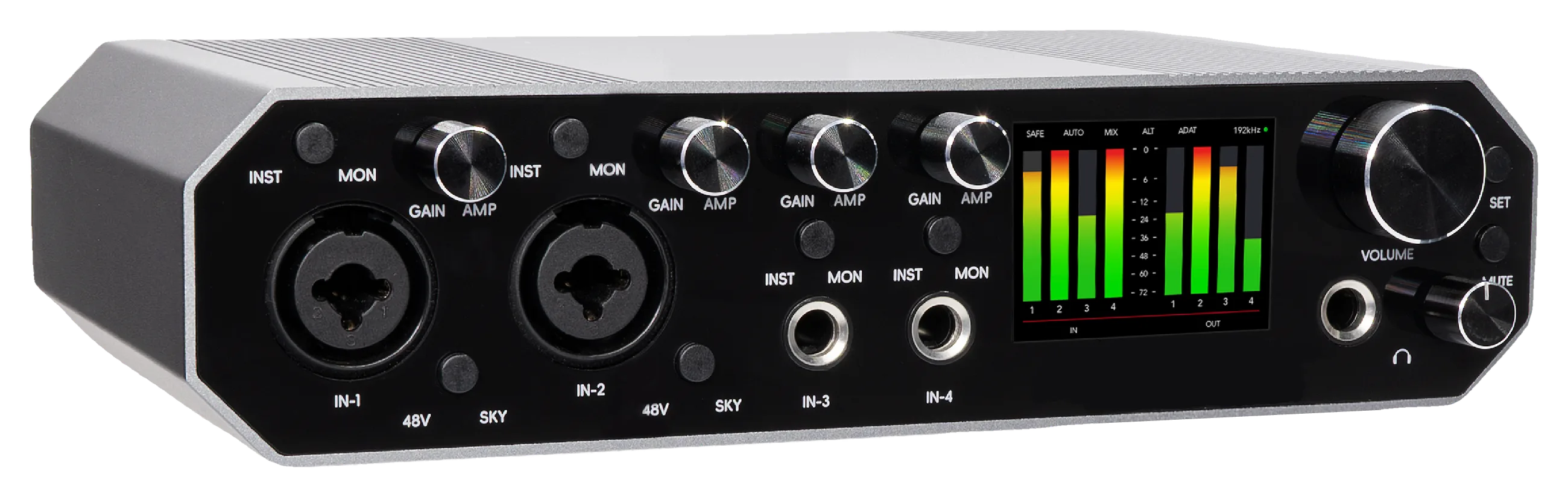
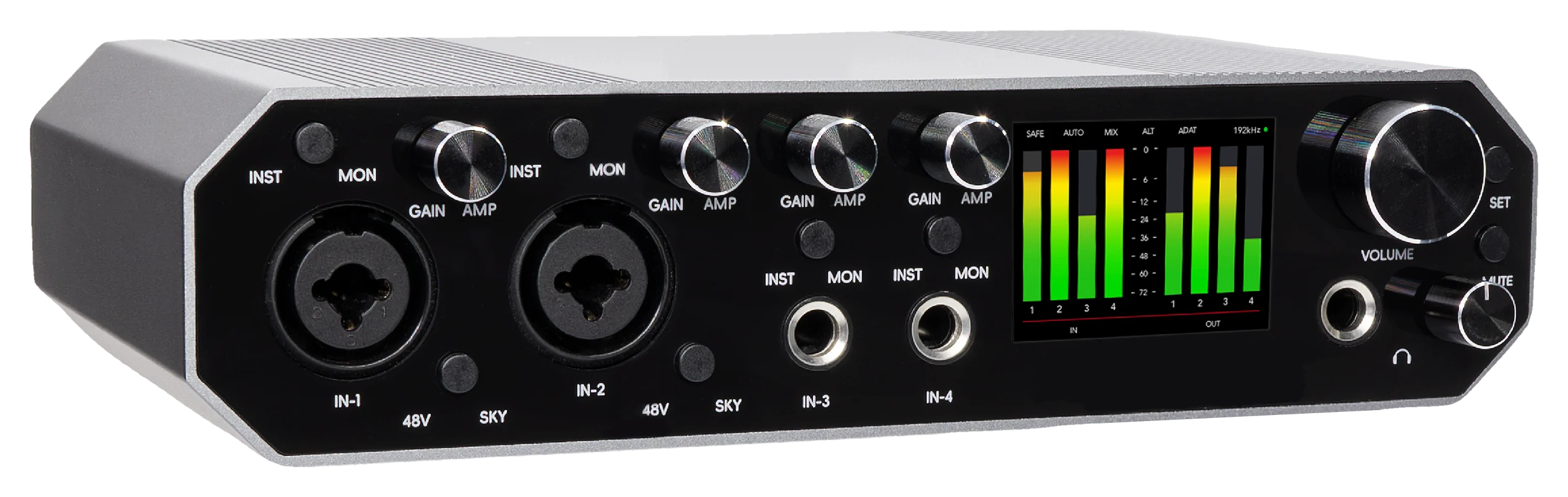
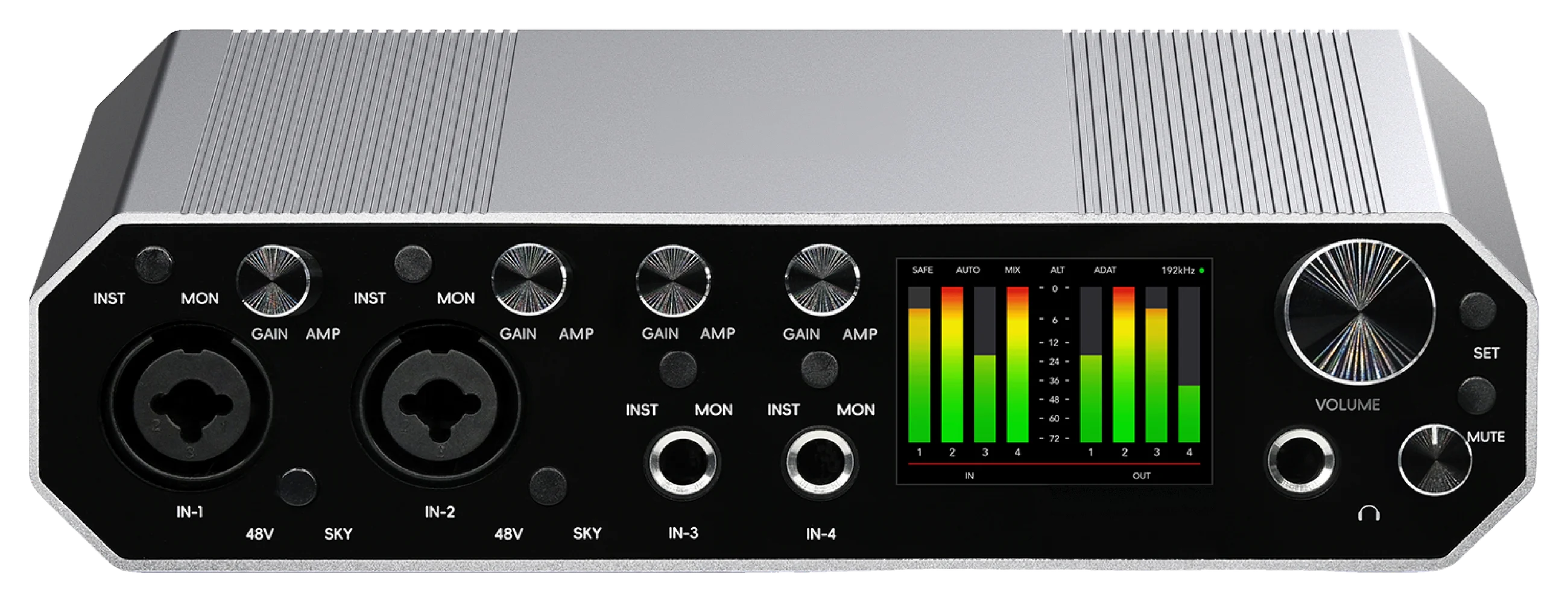
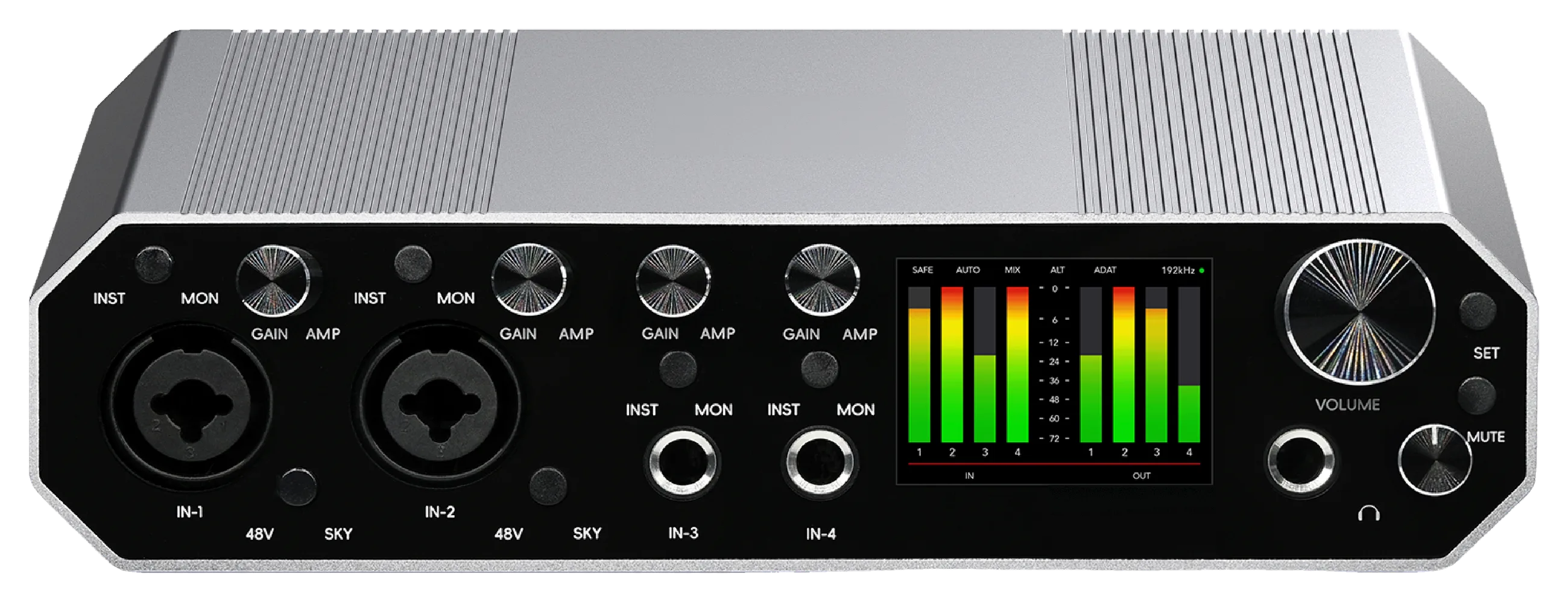
Front panel of the Layarav R4, shown straight on with all inputs, knobs, switches and the colour display.
  1. Input 1

    Combo XLR / 6.35 mm. Takes a microphone, a line source or an instrument.

  2. Input 2

    The second combo input, with its own gain, phantom and monitoring — nothing is shared with channel 1.

  3. Input 3

    6.35 mm input. Press INST to engage the high-impedance stage for a guitar or bass.

  4. Input 4

    The fourth input — the one a 2-in interface does not have. Four sources, four tracks, one take.

  5. INST / MON

    Per channel. INST switches the input impedance for instruments; MON routes the channel straight to your monitor path in hardware, with no round trip through the computer.

  6. GAIN / AMP

    A −12 dB to +40 dB gain stage on every channel. AMP adds preamp gain for quieter dynamic microphones.

  7. 48 V / SKY

    48 V phantom power, switched independently on inputs 1 and 2 so it never bleeds into another channel. SKY lifts the high-frequency response for condenser microphones.

  8. 2.0-inch colour display

    Four input meters, four output meters, the current sample rate, and the state of SAFE, AUTO, MIX, ALT and ADAT — without leaving your take.

  9. VOLUME

    The main monitor level encoder, driving the four balanced line outputs on the rear.

  10. SET / MUTE

    SET steps through the display and routing menus. MUTE kills the monitor path instantly.

  11. Headphones

    6.35 mm headphone output on its own amplifier stage, with its own level control beside it — so the performer’s mix and the room’s mix are not the same compromise.

Rear panel

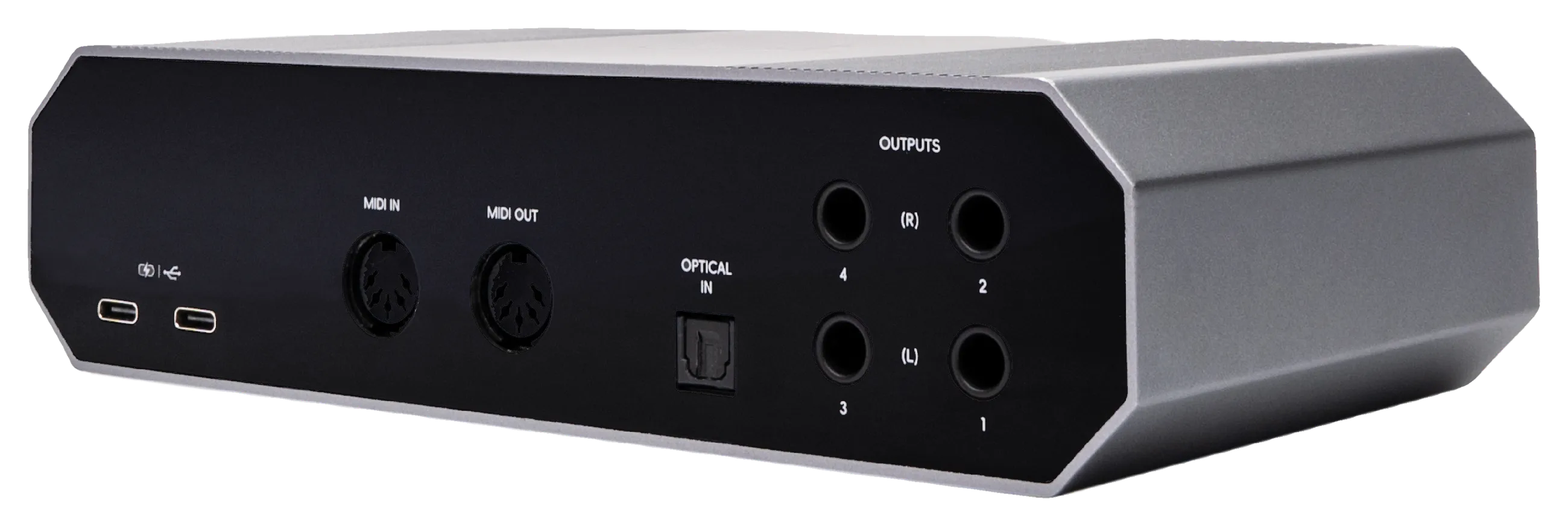
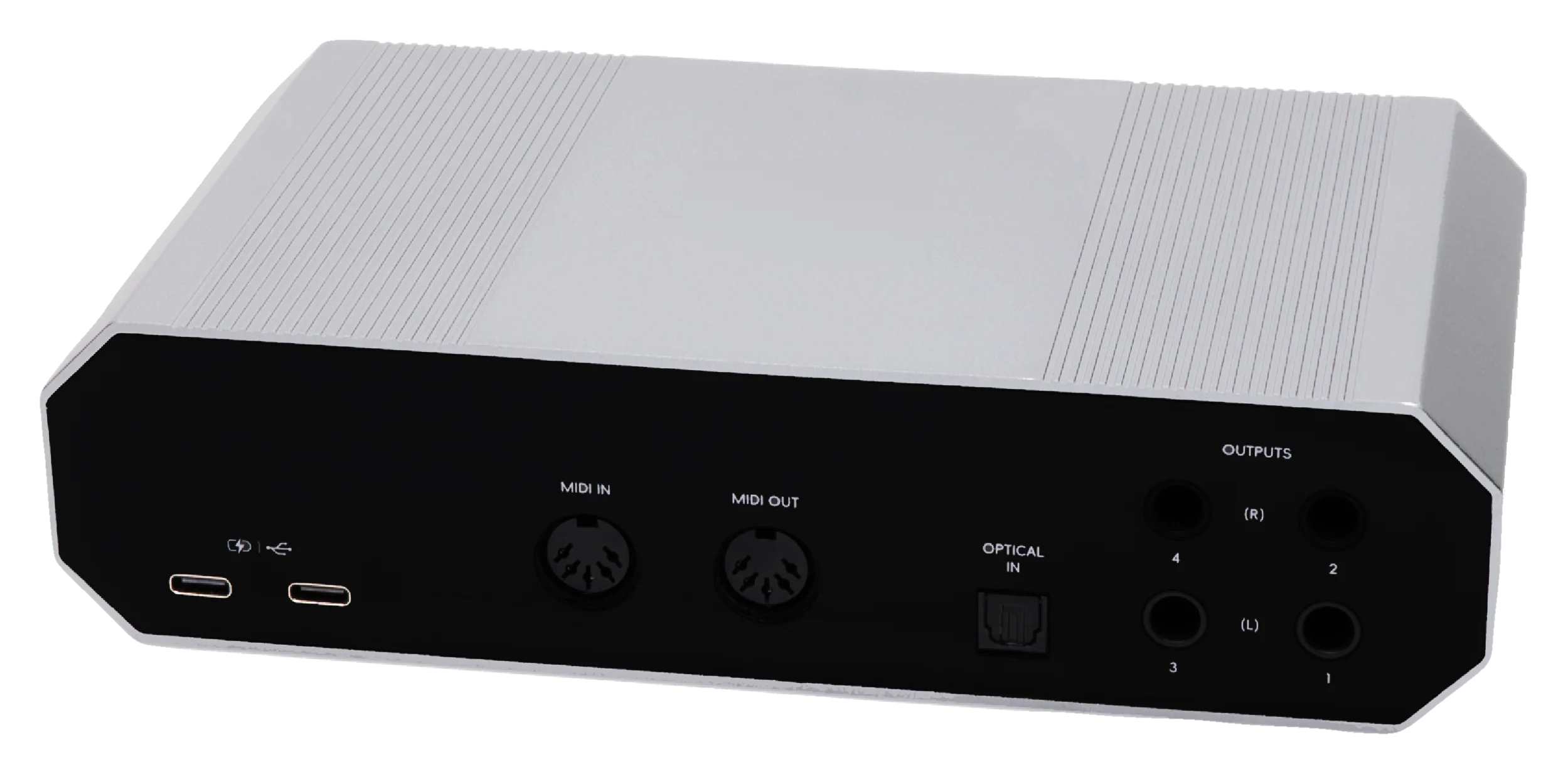
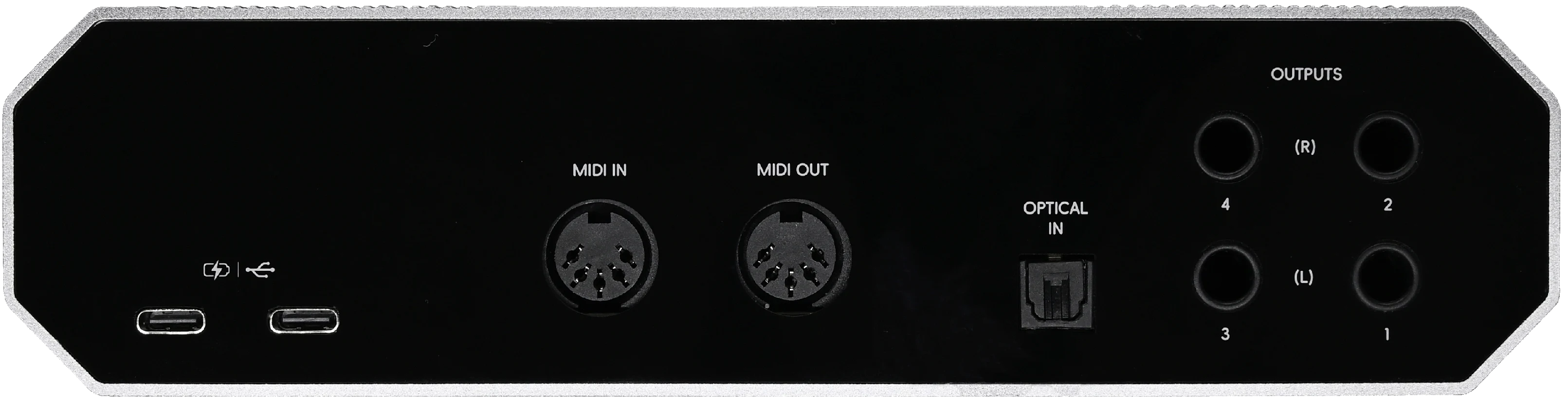
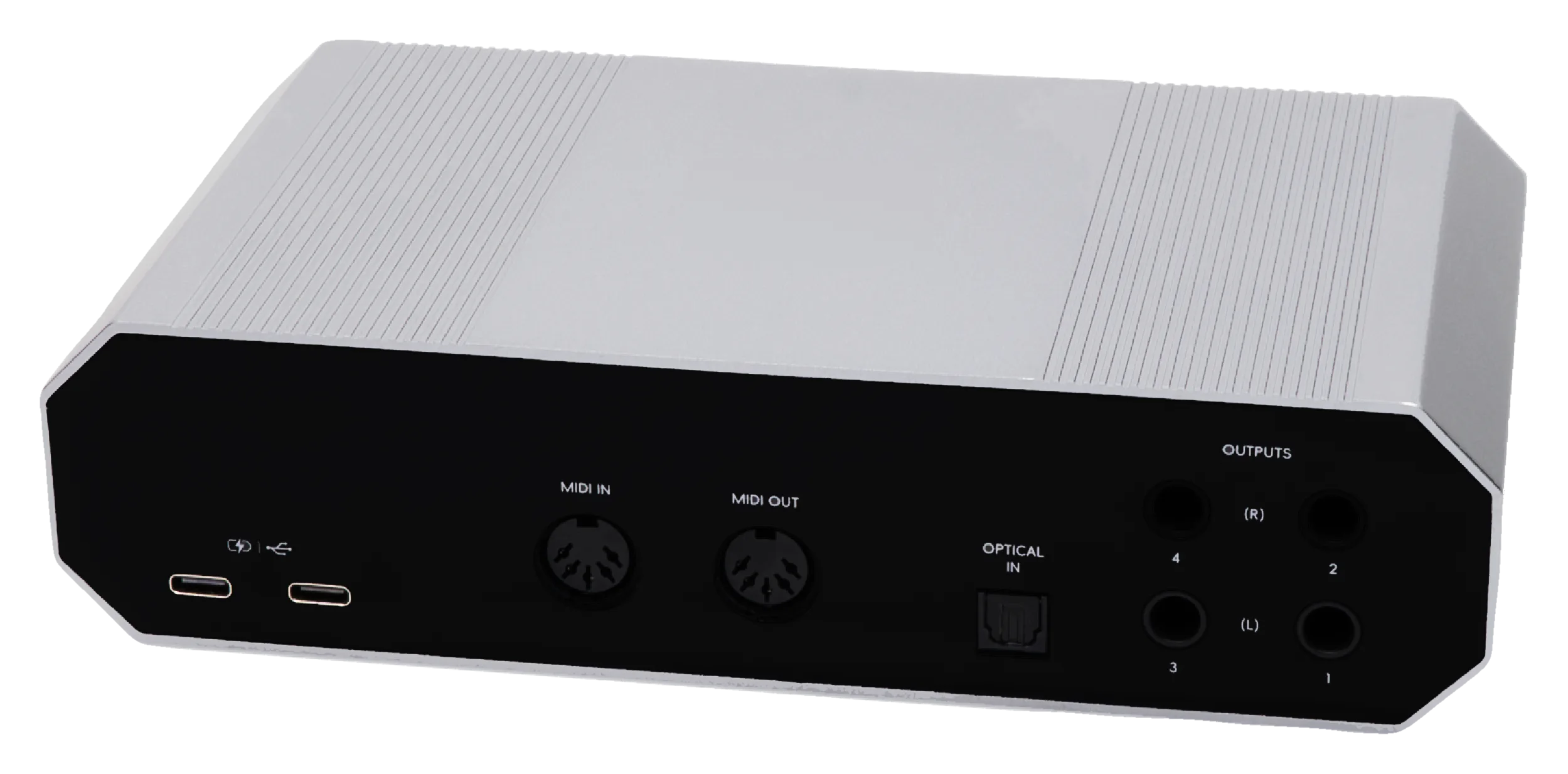
Rear panel of the Layarav R4, showing two USB-C ports, MIDI in and out, the ADAT optical input and four balanced outputs.
  1. USB-C — power

    External power in. Phantom-powered condensers and high-impedance headphones stop negotiating over a single laptop bus.

  2. USB-C — data

    Audio to and from a computer, tablet or phone. A modern connector, with no legacy adapter in the box.

  3. MIDI IN

    Full-size five-pin DIN. Play a controller that predates USB, with no dongle and no hub.

  4. MIDI OUT

    Drive a synth or sync a drum machine from your DAW.

  5. ADAT optical in

    The expansion port. Add an eight-channel preamp over one optical cable and the R4 becomes the front end of a real tracking room. Lock state shows on the front-panel display.

  6. Outputs 1–4

    Four balanced 6.35 mm line outputs. Outputs 1 and 2 are your main monitor pair (L / R); 3 and 4 feed a second pair, a headphone amp or an outboard chain.

Engineering

Nine things worth explaining.

Named, because we designed them — not because naming is marketing.

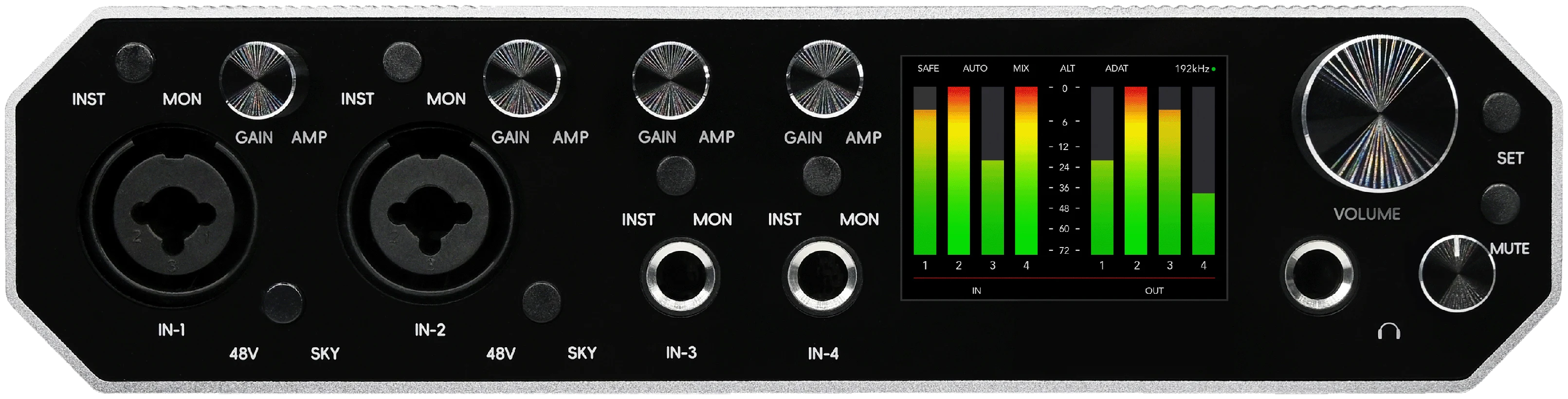
Close view of the Layarav R4 front panel showing four gain knobs above four inputs, each with its own INST and MON switching.

Sur · The preamps

Four preamps. Not two with excuses.

Sur is the note before the raga — the thing everything else is tuned against. The R4 gives you four of them, and every channel takes a microphone, a line source or an instrument. No shared gain, no channel you have to sacrifice to record a guitar. Each preamp runs its own −12 dB to +40 dB gain stage into the same conversion path, so channel one and channel four sound like each other.

  • Mic, line or instrument on every channel
  • −12 dB to +40 dB gain range, per channel
  • 48 V phantom power, switched independently
  • −128 dB EIN: the noise floor stays where you left it

Nāda · The conversion

110 dB of dynamic range, and nothing added.

Nāda is the primordial sound — the thing that exists before it is shaped. Our conversion stage is built to add nothing to it. 110 dB of A-weighted dynamic range means the quiet parts stay quiet; +16.2 dBu of maximum input level means the loud parts do not fold over. Frequency response holds flat across the audible band to a tenth of a decibel.

  • 110 dB dynamic range, A-weighted
  • −128 dB equivalent input noise
  • +16.2 dBu maximum input level
  • 24-bit, up to 192 kHz, on an internal low-jitter clock
The Layarav R4's 2.0-inch colour display showing eight live level meters for four inputs and four outputs.

Darpan · The display

You should not have to guess at a level.

Darpan means mirror. A 2.0-inch colour LCD sits in the front panel and shows every input and every output at once — eight meters, sample rate, and the state of each gain mode, without opening a control panel or alt-tabbing out of a take. Most interfaces at this price give you a green LED and a hope.

  • Four input and four output meters, live
  • Current sample rate, always visible
  • SAFE, AUTO, MIX, ALT and ADAT state at a glance

SAFE & AUTO · Intelligent gain

Two switches that save a take.

SAFE watches the input and pulls gain back before a transient clips, so a sudden solo or a shouted line does not cost you the pass. AUTO sets a sensible gain for the source in front of it and holds it there as the performer moves. Both live on the front panel and both are visible on the display. Neither is a plug-in, and neither needs a computer.

  • SAFE: clip protection on the way in
  • AUTO: gain that follows the performance
  • Per-channel AMP and SKY response modes
The Layarav R4's rear panel, with the ADAT optical input between the MIDI ports and the four balanced outputs.

Vistār · The expansion

The studio you have not built yet.

In a raga, the vistār is the slow unfolding — the section where a form grows into its full size. The R4 has an ADAT optical input, which means the four inputs you bought are not the four inputs you are stuck with. Add an eight-channel preamp over one optical cable and the drum kit, the choir, or the second guitarist arrives without a second interface. This is the specification entry-level interfaces quietly leave out.

  • ADAT optical input (TOSLINK)
  • Grow past four inputs without replacing the interface
  • ADAT lock state shown on the front-panel display
MIDI · Five pins, still standard

Your keyboard did not stop existing.

Full-size five-pin MIDI IN and MIDI OUT on the rear panel. Sync a drum machine, drive a synth, play a controller that predates USB — without a dongle, an adapter, or a hub that drops out mid-bar.

Close view of the Layarav R4's two rear USB-C ports, one marked for power and one for data.

Connectivity · Dual USB-C

One port for the computer. One for the power.

Two USB-C ports on the rear. One carries audio to and from a computer, tablet or phone. The other takes external power, so a phantom-powered condenser and a pair of hungry headphones do not have to negotiate over a single laptop bus. Modern connector, no legacy adapter in the box.

  • USB-C data to computer, tablet or phone
  • Separate USB-C power input for high-current sessions

Laya · The monitoring

Hear yourself in time.

Laya is rhythm — and rhythm is the first casualty of latency. Every input has its own MON switch that routes it straight to your monitor path in hardware, before the computer ever sees it. The headphone output runs on its own level control and its own amplifier stage, so the singer's mix and the room's mix are not the same compromise. Four balanced line outputs feed monitors, a second pair, or a headphone amp.

  • Per-channel direct monitoring, no round trip
  • Dedicated headphone amplifier and level control
  • Four balanced 6.35 mm line outputs
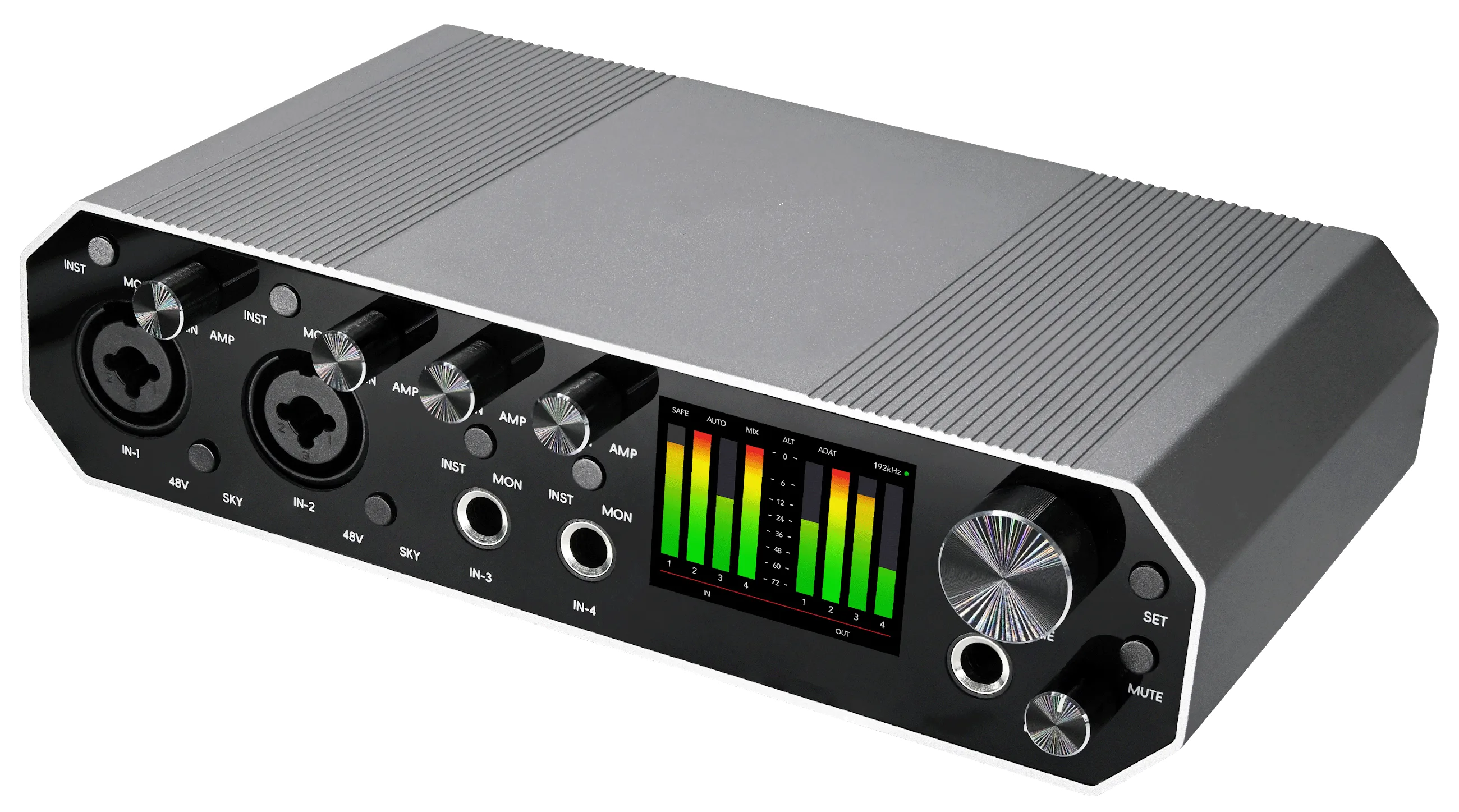
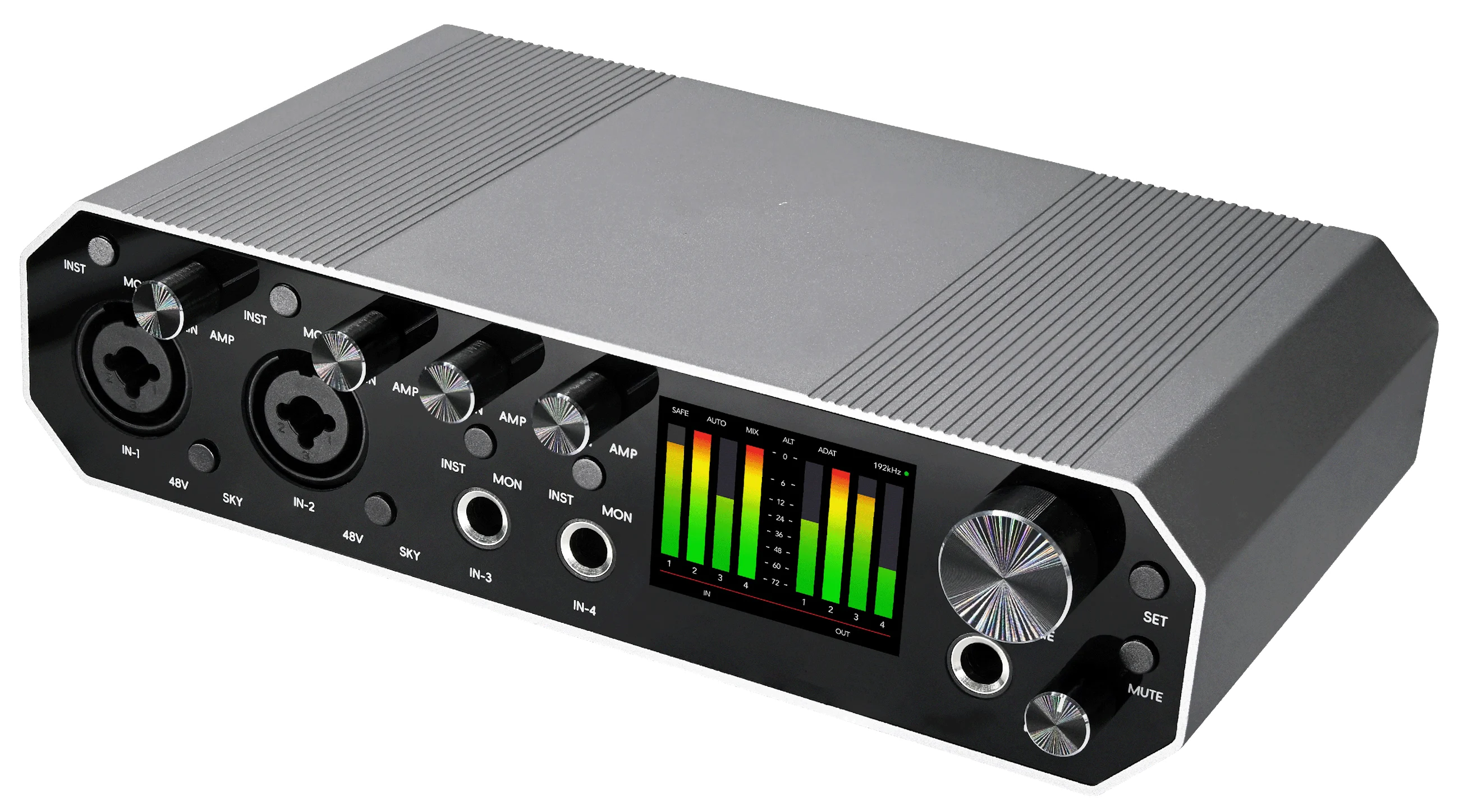
Top-down three-quarter view of the Layarav R4's ribbed brushed-aluminium chassis.

Dhruva · The build

650 grams of reason to trust it.

Dhruva means fixed, immovable — the pole star. The R4's shell is machined aluminium with a ribbed top and chamfered corners, and it weighs 650 grams because metal weighs something. It sits where you put it when you pull a cable. It sinks its own heat. It is covered for three years.

  • Full metal chassis, 650 g
  • 201 × 110 × 50 mm
  • Three-year warranty, stated up front

In the room

Five rooms the R4 was built for.

Not features. Jobs — the ones a 2-in interface makes you do twice.

The whole band, in one pass

Multitrack a live room

Two overheads on the combo inputs, a bass DI and a guitar on three and four — four sources, four separate tracks, one take. A 2-in interface makes you record the band twice and pretend it was once.

Two voices, one room

Podcast and interview

Two microphones with independent 48 V and independent gain, each on its own track for editing. SAFE keeps the guest who leans in from clipping the episode. The display tells you both levels are alive before you commit.

Hardware in the loop

The producer's rig

MIDI out to the synth, MIDI in from the controller, a stereo pair back through the line inputs and four balanced outs to monitors and a headphone amp. The R4 is the hub, not the bottleneck.

Live, and unattended

Streaming and performance

AUTO gain rides the level while your hands are on an instrument. Direct monitoring means you hear yourself in time, not a beat late. Dual USB-C means the laptop is not also the power supply.

Twelve inputs, one desk

The expanded studio

Add an eight-channel ADAT preamp over a single optical cable and the R4 becomes the front end of a real tracking room — a full drum kit, a horn section, a choir. Nothing on the desk changes but the cable.

Comparison

Why 4×4 and ADAT?

Held against the 2-in / 2-out interface that defines the entry tier. We are not naming anyone — we do not have to.

Mic / line / instrument inputs
Layarav R44
Typical 2×22
Balanced line outputs
Layarav R44
Typical 2×22
Record a full band simultaneously
Layarav R4Yes — four sources, four tracks
Typical 2×2No
ADAT optical expansion
Layarav R4Yes
Typical 2×2No
MIDI IN / OUT (5-pin DIN)
Layarav R4Yes
Typical 2×2Rarely
USB-C ports
Layarav R4Two — separate data and power
Typical 2×2One
Front-panel metering
Layarav R42.0-inch colour LCD, all eight channels
Typical 2×2Gain halo or a single LED
Dynamic range
Layarav R4110 dB (A-weighted)
Typical 2×2Often unpublished
Chassis
Layarav R4Full metal, 650 g
Typical 2×2Commonly plastic or part-metal
Warranty
Layarav R43 years
Typical 2×21–3 years
The value argument
Layarav R4Hardware you keep
Typical 2×2Software licences you outgrow

The value argument

Why the R4 out-specs the competition.

The R4 ships with no software bundle. That is a decision, not an omission. An interface that competes on the licences in its box is telling you where the money went. We put it in the I/O, the conversion and the metal — the parts you cannot download later.

Twice the I/O, at the same shelf price

Four combo inputs and four balanced outputs against the two-and-two that defines the entry tier. Every channel takes a mic, a line or an instrument. Nothing is shared.

An expansion path, not a ceiling

ADAT optical in means the interface grows with the room. Entry interfaces have no route past their front panel — the upgrade path is a new purchase.

Numbers we are willing to print

110 dB dynamic range. −128 dB equivalent input noise. +16.2 dBu maximum input level. Published, in the specification table, where you can hold them against anyone else's.

Connectivity that assumes you own other gear

Five-pin MIDI in and out. Two USB-C ports so power and data are not fighting. A studio is a system, and the R4 is built to be part of one.

Metal, and three years behind it

650 grams of machined aluminium and a three-year warranty. Bundled plug-ins do not survive an OS upgrade. A chassis does.

Specifications

Every number, in one table.

Measured, published, and repeated from the sections above so you can check us.

Overview

Model
LA-R4
Series
Raag Series
Type
4-in / 4-out USB-C audio interface
Resolution
24-bit, up to 192 kHz
Supported sample rates
44.1 · 48 · 88.2 · 96 · 176.4 · 192 kHz
Clock source
Internal low-jitter crystal oscillator

Inputs and outputs

Analogue inputs
4 — microphone, line or instrument
Input connectors
2 × combo XLR–6.35 mm (IN-1, IN-2) · 2 × 6.35 mm (IN-3, IN-4)
Analogue outputs
4 × 6.35 mm balanced
Headphone output
1 × 6.35 mm, dedicated level control
Phantom power
48 V, independently switchable on IN-1 and IN-2
Digital I/O
ADAT optical input (TOSLINK)
MIDI
MIDI IN and MIDI OUT, 5-pin DIN
Computer connection
2 × USB-C — one data, one external power

Audio performance — microphone input

Dynamic range
110 dB (A-weighted)
Equivalent input noise
−128 dB (A-weighted)
Maximum input level
+16.2 dBu
Frequency response
20 Hz – 20 kHz, ±0.1 dB
THD+N
< 0.0012%
Gain range
−12 dB to +40 dB
Input impedance
3 kΩ

Audio performance — line input

Dynamic range
110 dB (A-weighted)
Frequency response
20 Hz – 20 kHz, ±0.1 dB
THD+N
< 0.002%
Gain range
−12 dB to +40 dB
Input impedance
60 kΩ

Audio performance — instrument input

Dynamic range
110 dB (A-weighted)
Frequency response
20 Hz – 20 kHz, ±0.1 dB
THD+N
< 0.03%
Gain range
−12 dB to +40 dB
Input impedance
1 MΩ

Audio performance — outputs

Line output dynamic range
105 dB (A-weighted)
Maximum output level
+15.5 dBu
Line output THD+N
< 0.002%
Line output impedance
420 Ω
Headphone dynamic range
104 dB (A-weighted)
Headphone maximum output
+7 dBu
Headphone output impedance
< 1 Ω

Physical

Chassis
Machined aluminium
Dimensions (W × D × H)
201 × 110 × 50 mm
Weight
650 g
Warranty
3 years

In the box

What arrives.

Layarav R4
Raag Series · model LA-R4, serial-registered
USB-C cable
For data and bus connection to your computer
Quick-start guide
Set up and record your first take
Warranty card
Three years, activated when you register your serial

No software bundle. That is deliberate — seethe comparison.

Warranty & support

3years

Every Layarav R4 carries a 3-year limited hardware warranty. It is a metal box built to outlast the laptop it is plugged into, and we are willing to put a number on that.

  • Manufacturing defects in materials and workmanship
  • Free repair or replacement of the covered unit
  • Support handled in India, in your time zone
  • Activated when you register your serial number

Serial format LR4-{batch}-{sequence} — for example LR4-01-0047. Found on the base of the unit.

Downloads &amp; getting started

Everything you need, in one place.

Drivers, manuals and firmware are treated as living content, not an afterthought.

Windows driver (ASIO)

Low-latency driver for Windows 10 and 11.

User manual (PDF)

Every control, every menu, every port.

Quick-start guide

Out of the box to your first take.

Firmware

Versioned and dated. We keep this page alive.

Reviews & press

Nothing here yet.

The R4 is new. When creators and reviewers have spent real time with it, their words go here — and not before. Until then, the specification table is the argument.

Four in. Four out. Room to grow.

₹15,999 inclusive of GST, against an MRP of ₹24,999. Three-year warranty. Shipped and sold through Amazon.

Sold through Amazon.in. Layarav does not operate an on-site checkout.